Blog
Essential Sensor Modules for Healthcare, Security & More

Sensor Modules: Revolutionizing Modern Applications

Sensor modules are integral to the development of smart, responsive systems across various fields. From healthcare to security, these modules enable devices to collect and process critical data, ensuring better functionality and user experience. Let’s explore how sensor modules enhance applications in healthcare, security, environmental monitoring, and beyond.

Healthcare: Precision and Accuracy

Infrared Thermometer Module BMH06203-31

In healthcare, sensor modules play a vital role in patient monitoring and diagnostics. Heart rate sensors, oxygen saturation modules, and temperature sensors are commonly used in wearable devices. Visit our website to explore sensor solutions for medical applications.

They provide real-time feedback, helping medical professionals make informed decisions. These sensors are compact, reliable, and highly accurate, ensuring seamless integration into modern medical systems. Learn more about advanced healthcare sensors at Holtek’s medical solutions.

Security: Enhanced Safety Solutions

Security systems have evolved significantly with the integration of sensor modules. Motion detectors, infrared sensors, and camera modules ensure safety by monitoring environments in real time. These modules detect unauthorized access, unusual activity, and even environmental changes like fire or gas leaks. They are essential in both residential and commercial security setups.

Environmental Monitoring: Sustaining the Planet
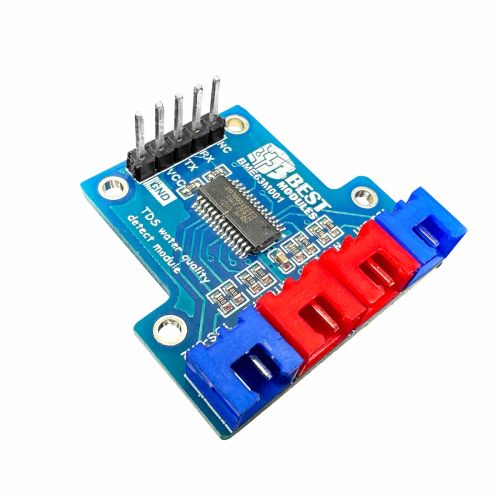
TDS Sensor Water Quality Detection Module (BMCOM) BME63M001

Environmental monitoring relies heavily on sensor modules to measure air quality, temperature, humidity, and pollution levels. Visit our environmental monitoring sensors page for a comprehensive range of solutions.

For instance, air quality sensors detect harmful gases and particulates, alerting authorities to take timely action. Learn more about environmental sensor technology at Holtek’s environmental solutions.

Movement and Distance: Smart Automation

In automation and robotics, movement and distance sensors are indispensable. Ultrasonic sensors, infrared sensors, and lidar modules help devices measure distances and navigate their surroundings. They are widely used in drones, autonomous vehicles, and smart appliances, enhancing efficiency and safety.

Weighing Applications: Accuracy Redefined

Weighing sensor modules, such as load cells, are crucial in industrial and consumer applications. They are used in digital scales, packaging machines, and inventory systems. These sensors ensure accurate weight measurements, improving productivity and reducing errors in various processes.

Conclusion: The Future is Sensing

Sensor modules are driving innovation across diverse industries. They ensure precision in healthcare, safety in security systems, and sustainability in environmental monitoring. Additionally, they enable smart automation in movement, distance, and weighing applications. As technology advances, sensor modules will become even more versatile and integral to creating smarter, safer, and more efficient systems.

Blog
32-bit MCUs vs 8-bit MCUs vs Peripheral ICs

Learn the differences between 32-bit and 8-bit MCUs, their applications, and how peripheral ICs enhance their capabilities in embedded systems.

What is an MCU?

A microcontroller (MCU) is a compact integrated circuit that contains a processor core, memory, and programmable input/output peripherals. It acts as the brain of the device, executing instructions and managing data. Depending on the application, MCUs come in various architectures, with 8-bit and 32-bit being the most commonly used types.

32-bit MCUs

32-bit microcontrollers offer high performance, with a wide range of capabilities that make them suitable for complex and resource-intensive applications.

Key Features:

HT32F5828 64LQFP
32-bit MCU
  1. Processing Power: 32-bit MCUs process data in chunks of 32 bits, enabling faster calculations and handling of more complex algorithms.
  2. Memory Access: These MCUs can directly address larger amounts of memory (up to 4GB or more), making them ideal for applications requiring large data buffers or multitasking.
  3. Complex Applications: 32-bit MCUs are ideal for advanced applications like IoT (Internet of Things) devices, robotics, automotive systems, and industrial automation, where higher processing power is necessary.
  4. Advanced Peripherals: With high-speed ADCs, DACs, and multiple communication interfaces (SPI, UART, I2C), they offer flexibility for various applications.
  5. Example: The Holtek HT32F52367 (available through Spin Modules) is an example of a powerful 32-bit MCU that supports complex applications and is compatible with the BMduino-UNO.

Applications of 32-bit MCUs:

  • Smart Home Systems: Automation and security solutions.
  • Robotics: Complex systems with sensors, algorithms, and movement.
  • Automotive: Engine control units and safety features.
  • Medical Devices: Wearables and diagnostic equipment.

8-bit MCUs

8-bit MCUs are simpler, more affordable microcontrollers ideal for less resource-demanding tasks, operating on 8-bit data at a time.

Holtek 8 bit MCU
8-bit MCU

Key Features:

  1. Basic Processing Power: Suitable for simpler tasks like controlling lights, sensors, and motors.
  2. Memory Limitations: 8-bit MCUs have smaller memory addressing capabilities, making them ideal for applications with lower data storage needs.
  3. Low Power Consumption: These MCUs are energy-efficient, making them suitable for battery-powered applications.
  4. Cost-Effective: 8-bit MCUs are cheaper, making them perfect for mass-produced, low-cost devices.
  5. Example: The AVR ATmega328, found in the Arduino UNO, is a popular 8-bit MCU, widely used for hobby projects and educational purposes.

Applications of 8-bit MCUs:

  • Home Appliances: Microwaves and toasters.
  • Toys and Gadgets: Simple toys with embedded control systems.
  • Robots: Low-cost robots with basic functions.
  • Embedded Systems: Basic sensors and alarms.

Peripheral ICs

Peripheral ICs enhance MCU functionality by providing specialized features, such as data conversion, communication, and power management.

Types of Peripheral ICs:

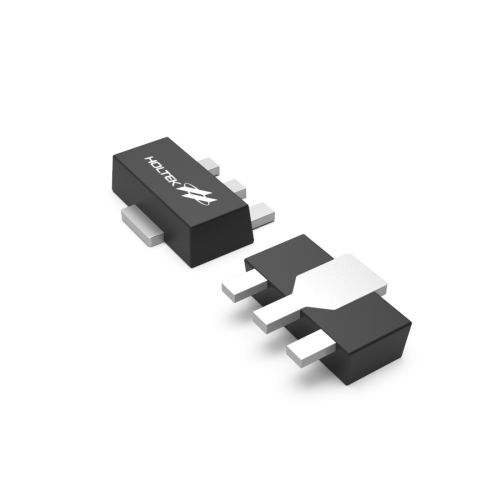
30mA LDO HT7133-1 SOT89
Peripheral IC
  1. ADC/DAC: Convert analog signals to digital and vice versa for signal processing.
  2. Power Management ICs: Handle voltage regulation, battery charging, and power distribution.
  3. Communication Interfaces: External ICs for USB, Bluetooth, Wi-Fi, and Ethernet capabilities.
  4. Memory ICs: External memory chips like EEPROM and Flash to extend storage for larger systems.

Applications of Peripheral ICs:

  • Signal Processing: High-quality ADCs and DACs for audio or sensor data conversion.
  • Wireless Communication: Adding Bluetooth or Wi-Fi to a system.
  • Power Systems: Voltage regulation for portable devices.
  • Storage: Expanding memory for data-heavy applications.

Conclusion

Both 32-bit and 8-bit MCUs serve important roles in embedded systems, with 32-bit MCUs offering higher performance and memory capacity for complex tasks, while 8-bit MCUs excel in simplicity, power efficiency, and cost-effectiveness. Peripheral ICs enhance MCU capabilities by providing specialized features like communication, signal conversion, and power management. Understanding these components will help you design efficient, high-performance embedded systems.

For more on Holtek MCUs and their capabilities, visit Holtek Electronics. Additionally, you can explore more peripheral solutions at Best Modules.

Blog
Exploring the BMduino-UNO Development Board

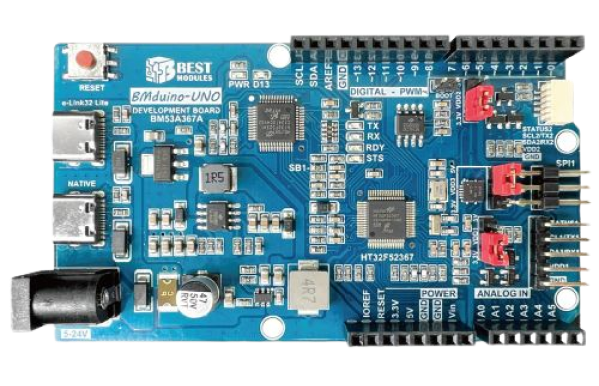
The BMduino-UNO Development Board BM53A367A is a versatile and innovative platform designed to empower makers, students, and professionals in the electronics and programming world. Built around the Holtek 32-bit MCU HT32F52367, this development board is engineered for seamless compatibility with the popular Arduino UNO R3.

Key Features of BMduino-UNO

BMduino UNO
BMduino-UNO Development Board BM53A367A
  1. Powerful MCU: At the heart of the BMduino-UNO lies the Holtek HT32F52367, a 32-bit microcontroller offering advanced performance for demanding applications.
  2. Arduino-Compatible: The board is pin-compatible with the Arduino UNO R3, making it an excellent choice for those transitioning from Arduino to a more powerful platform.
  3. Dual IDE Support: Developers can use both the Arduino IDE and Keil IDE, providing flexibility in programming and debugging.
  4. Comprehensive I/O Capabilities:
    • 31 digital I/O pins (17 PWM-capable)
    • 7 analog inputs with 12-bit resolution
    • Communication interfaces: UART, SPI, I2C, USB
    • 14 external interrupts for responsive applications
  5. Robust Power Options: The BMduino-UNO offers multiple power input methods, including dual USB interfaces, DC input, and external Vin, ensuring adaptability to different environments.
  6. Ample Memory: With 4KB of EEPROM, the board is capable of handling complex data storage and processing tasks.

Applications and Possibilities

The BMduino-UNO opens doors to a wide range of applications, including but not limited to:

  • Smart Home Solutions: Create devices for home automation and security.
  • IoT Projects: Design connected systems using wireless communication modules.
  • Robotics: Develop robots with obstacle avoidance and line-following capabilities.
  • Health Monitoring: Build systems to track parameters like heart rate and oxygen levels.
  • Education and Prototyping: Ideal for academic projects and learning microcontroller programming.

Why Choose BMduino-UNO?

The BMduino-UNO stands out as a powerful yet user-friendly development board. Its dual IDE compatibility, pin-to-pin Arduino UNO R3 matching, and advanced features make it perfect for both beginners and experienced developers. Whether you’re creating a hobby project or an industrial prototype, the BMduino-UNO provides the tools and flexibility to bring your ideas to life.

Getting Started

To start using the BMduino-UNO, simply:

  1. Download the Required IDEs: Install Arduino IDE or Keil IDE based on your preference.
  2. Set Up Your Environment: Connect the board via USB and follow the instructions for driver installation.
  3. Explore Examples: Leverage built-in libraries and examples to jumpstart your projects.

Where to Buy?

The BMduino-UNO is available for purchase at Spin Modules. With fast delivery options and robust support, Spin Modules ensures you have everything you need to innovate and excel. You can also explore more about the Holtek MCU and Best Modules for additional products and resources.

Conclusion

The BMduino-UNO Development Board BM53A367A bridges the gap between simplicity and advanced functionality, making it an essential tool for developers. Its compatibility, features, and versatility position it as a standout choice in the world of microcontroller development boards. Start your journey with BMduino-UNO today and bring your electronic projects to life!

X